


Planning a family trip to Munich, Germany? Read on for an in-depth guide to the city and all the best things to do when you visit Munich with kids.
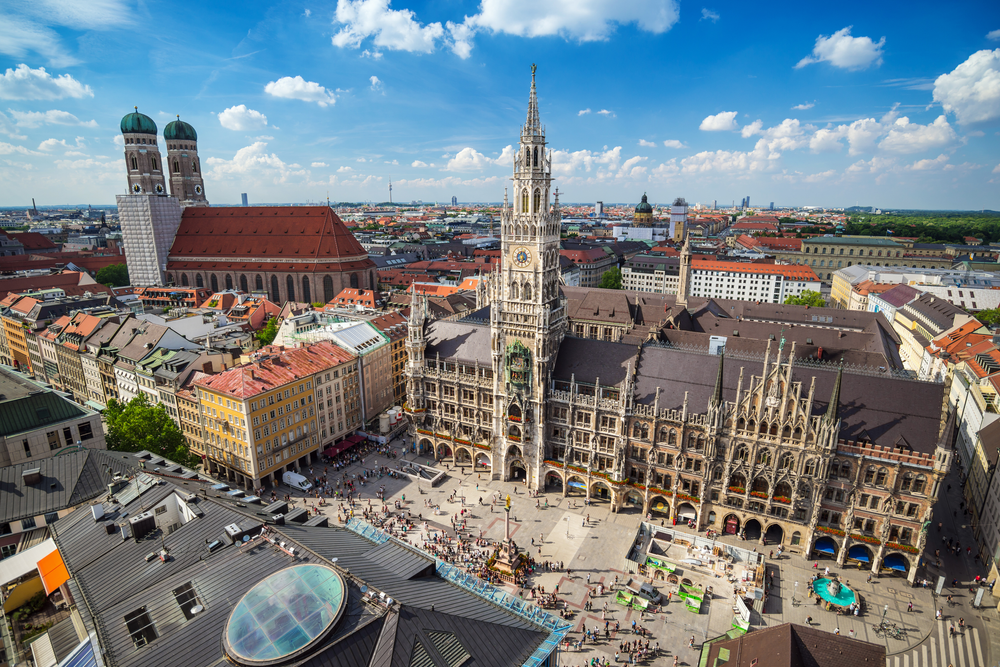
Munich is a thriving, historic metropolis offering parks and palaces, world-class museums, and a unique Bavarian culture–all just a short distance from Neuschwanstein Castle and the sprawling Alps. I lived in Munich for two years, so I speak from plenty of experience when I tell you it’s a fantastic city for your whole family to explore.
Munich (or München, as it’s called in Germany) was founded in 1158. It’s the long-time capital of Bavaria, or Bayern, which was its own kingdom from 1806 to 1918. Though it’s the largest city in southern Germany, it doesn’t feel so big (unless it’s summer and you’re counting tourists). In fact, Germans sometimes call Munich “Millionendorf,” or “village of a million people.”
With good reason, many people associate Munich with Oktoberfest, the giant beer festival that occurs every September to early October. While Oktoberfest is definitely a huge part of Munich’s identity, the city has so much more to offer! Keep on reading to discover all the things you can see and do in Munich with kids.
EXPLORE THE CITY
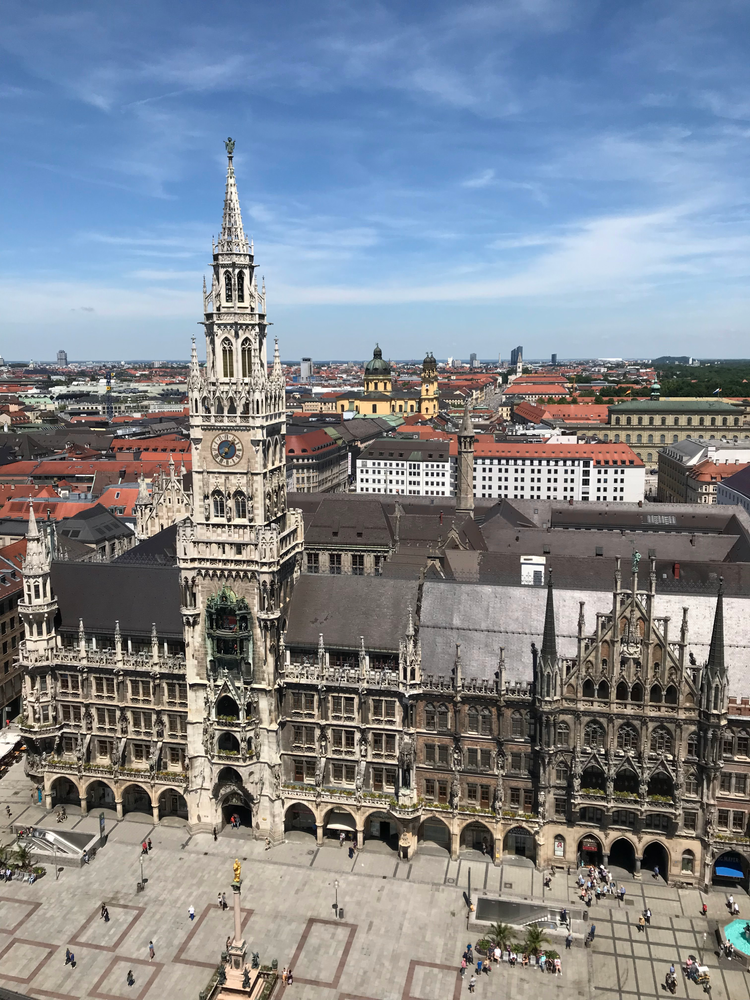 Neues Rathaus at Marienplatz
Marienplatz (Mary’s Square)
The Marienplatz is the heart of Munich. Once a medieval marketplace, it’s now a spacious square lined with restaurants and shops as well as the city’s old and new town halls. Some of the most noteworthy sights include:
-
- Neues Rathaus (New Town Hall) — Though this famous building looks very old, it was actually built between 1867-1909. You can take an elevator to the top for views of the city, but the best thing about the Neues Rathaus is its renowned Glockenspiel. At 11:00 am and 12:00 pm (and 5:00 pm from March – October), a carillon plays and colorful figurines emerge to reenact a 16th-century marriage (complete with jousting) and a coopers’ dance. Be prepared for crowds.
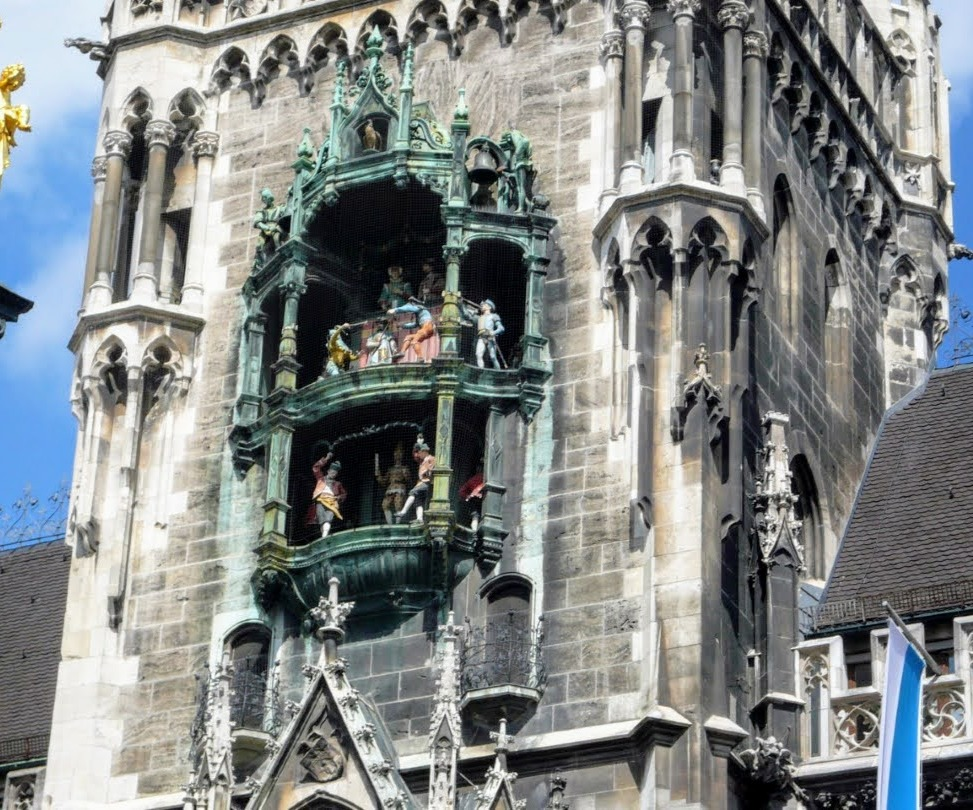 The Glockenspiel in action
-
- Mariensäule (Mary’s Column) — Located at the center of the square, this large column from 1638 commemorates the end of the city’s Swedish occupation after the Thirty Years’ War.
-
- Altes Rathaus (Old Town Hall) — The city’s former town hall dates back to the 15th century, but it has been renovated many times over the centuries, and it was almost completely destroyed during World War II. Now a lovely-looking restoration, it houses the city’s Toy Museum.
-
- Kaufhof — The department store on the southwest corner of the Marienplatz has the best selection of chocolate and candy I ever found in Munich. Stop in, head to the basement level, and enjoy!
 The historic Altes Rathaus is the back left building with the tower
Peterskirche (St. Peter’s Church)
Located just south of Marienplatz, Peterskirche is the city’s oldest church. It was dedicated in 1368, but there has been a church on this site since the 11th century. If you can handle the 306 steps with kids, climb up the tower for a panoramic view that’s generally considered the best the city has to offer (it’s inexpensive, too). On a clear day, you can even see the Alps to the south.
Viktualienmarkt
The nearby Viktualienmarkt offers the most quintessential Munich experience. Both a beer garden and a marketplace (it has a farmer’s market and other food shops), it’s the perfect place to stop for a light meal and some people watching. You can also admire the tall, blue-and-white striped maypole that’s found in cities throughout Bavaria.
Residenz Museum
Residenz means “residence,” which seems like a major euphemism because it describes the premier palace of the Wittelsbach family, who ruled Bavaria first as dukes and then as kings from 1180-1918. The Residenz began as a 14th-century castle and has since evolved into the vast palace you’ll find today. You can tour 90 rooms (this will be quite a haul if you have young kids), including banquet and reception halls, chapels, and private apartments. It’s an excellent tour.
For an additional fee, you can also visit the Cuvilliés Theater, a reconstruction of the beautifully decorated, 18th-century theater where Mozart once conducted, as well as the Treasury, which contains crowns, coronation regalia, jewels, religious objects and more. My favorite piece is the jewel-encrusted statuette of St. George killing the dragon.
Finally, be sure to visit the Hofgarten, the former court gardens located north of the Residenz. It’s a good place to stop and relax after the long (but worthwhile) palace tour.
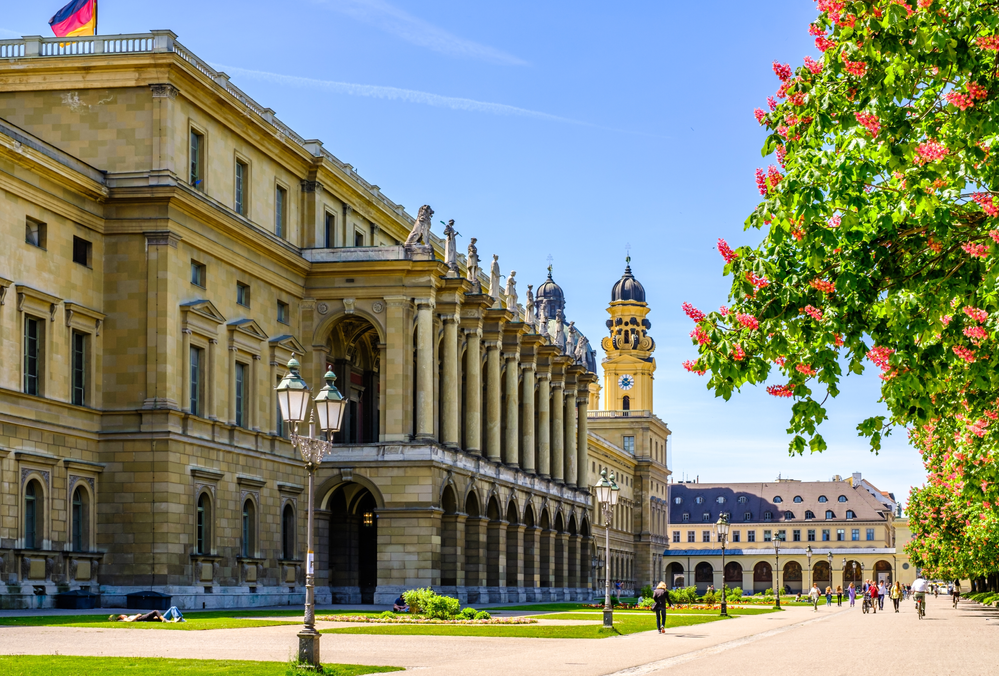 A view of the Residenz from the Hofgarten
City Streets
It’s a pleasure to wander through Munich’s historic streets. One of the most famous streets is Kaufingerstrasse, a pedestrianized shopping street that runs west from Marienplatz to one of the old city gates (with the Hauptbahnhof, or main train station, just a bit beyond).
I also recommend wandering through the streets between the Marienplatz and the Residenz. You’ll find Maxilimilianstrasse, home to extremely high-end shopping, as well as the iconic Hofbräuhaus beer hall. Even if you don’t want to eat or drink at the Hofbräuhaus, it’s worth it to step inside and take a look around. The original building dates back to the 16th century, and it’s where Hitler made a speech founding the Nazi Party (for a lighter bit of history, Mozart imbibed there while writing the opera Idomeneo).
Frauenkirche (Church of Our Lady)
Technically called the Münchner Dom (Munich Cathedral), the Frauenkirche is easily recognized by its twin onion domes. Mostly completed between 1466-1488 (pretty speedy for a cathedral!), it’s Munich’s most beloved landmark. Per the result of a recent vote, no building in the city can exceed its height of 325 feet.
For more churches, visit the Michaelskirche on Kaufingerstrasse (home of numerous Wittelsbach tombs) and the nearby Asamkirche, a decadently decorated, once private Baroque chapel.
VISIT MUSEUMS
Deutsches Museum (German Museum)
The Deutsches Museum is the world’s largest science and technology museum. It has around 28,000 exhibited objects, from ships and airplanes to model trains, underground mines, musical instruments, and much, much more. Families will enjoy the many hands-on activities as well as the Kinderreich (Kids’ Kingdom), a sort of small-scale children’s museum located in the basement. You can also head to the roof of the museum to enjoy its sundial garden.
 The Deutsches Museum (left) is located on an island in the Isar River
Though it’s hard to believe that a museum of its size is in need of more room, the Deutsches Museum has two satellite museums. You can buy a discounted pass to visit all three.
-
- Transportation Museum — Located close to the grounds of Oktoberfest, this museum is loaded with historic cars and trains as well as other transportation devices such as carriages, trams, motorcycles, buses, and skis. Among other highlights, my kids were thrilled to see an early Bugatti.
-
- Flight Museum — This museum offers plenty of planes, gliders, and helicopters as well as fascinating historical information with English translations. For instance, there’s a small plane that an East German family secretly built to fly to freedom in West Germany. Sadly, they were caught just days before takeoff. While it’s a little tricky to get to the museum with public transportation (it requires a commuter train ride and a 15-minute walk), it’s conveniently located next to Schleissheim Palace. You can tour this relatively little-visited palace or just enjoy its lovely grounds.
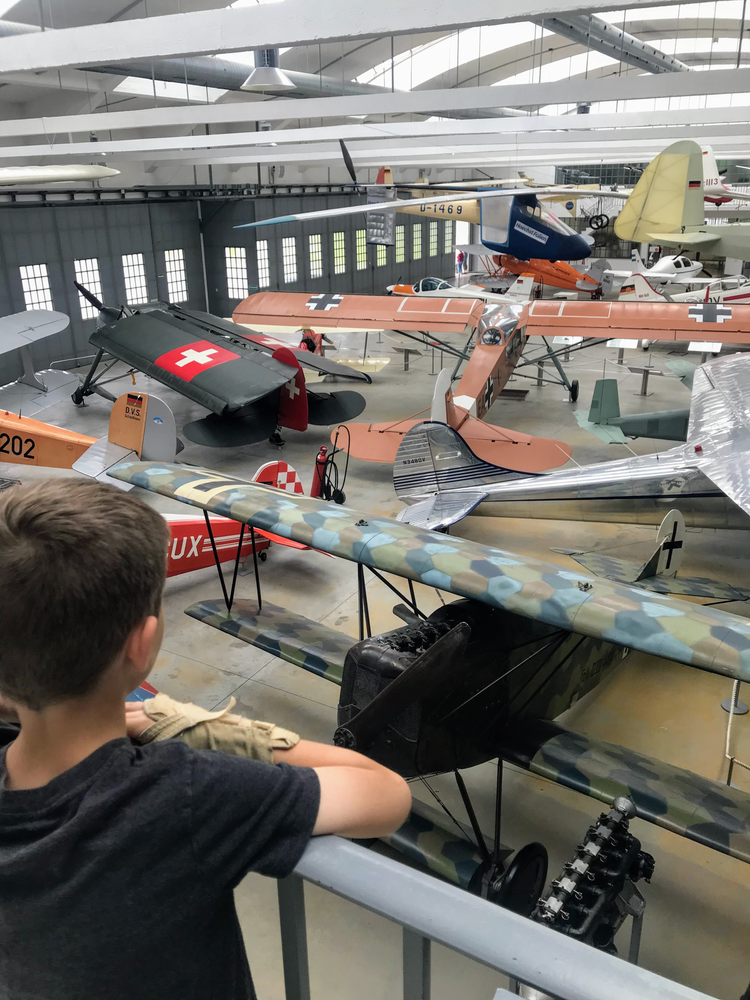 The Flight Museum
Art Museums
Munich’s main, world-class art museum is divided into three different galleries:
-
- The Alte Pinakothek (Old Art Gallery) features European masterpieces from the 14th-19th century, including works by Raphael, Rembrandt, and Rubens as well as Germans such as Albrecht Dürer.
-
- The Neue Pinakothek (New Art Gallery) displays paintings from roughly 1800-1920, including Impressionist and Post-Impressionist paintings from artists such as Monet, Degas, Cézanne, Van Gogh, and Klimt.
-
- The Pinakothek der Moderne (Modern Art Gallery) showcases 20th and 21st-century art by painters including Picasso, Dali, Kandinsky, and Klee. Both Wassily Kandinsky and Paul Klee once lived in Munich and were part of the famous Der Blaue Reiter (The Blue Rider) group.
All three Pinakotheks are located in Munich’s museum quarter (Kunstareal) and can be visited on a single, discounted admission pass.
If you’re looking for more art museums, consider the Glyptothek (Greek and Roman sculpture), Haus der Kunst (temporary exhibitions of modern art), Museum Brandhorst (modern art), and Lenbachhaus (which focuses on Munich painters including The Blue Rider group as well as contemporary artists).
 Taking a play break on the grounds outside the Alte Pinakothek
Other Museums
Unfortunately, it’s not possible to discuss Munich in depth without also acknowledging its dark association with Hitler and Nazism. The NS-Dokumentationszentrum (Nazi Documentation Center), built on the site of former Nazi headquarters, explains the history of Nazism with a special focus on Munich’s role in its rise and fall. Recently opened in 2015, it’s part of Germany’s concentrated effort to confront the horrors of its past in hopes that something like it will never happen again.
Still looking for museums? There’s also the Munich City Museum, Bavarian National Museum, Jewish History Museum, and Egyptian Museum. The Egypt Museum’s display on the Book of the Dead was a hit with my kids.
ENTERTAIN THE KIDS
Hellabrunn Zoo
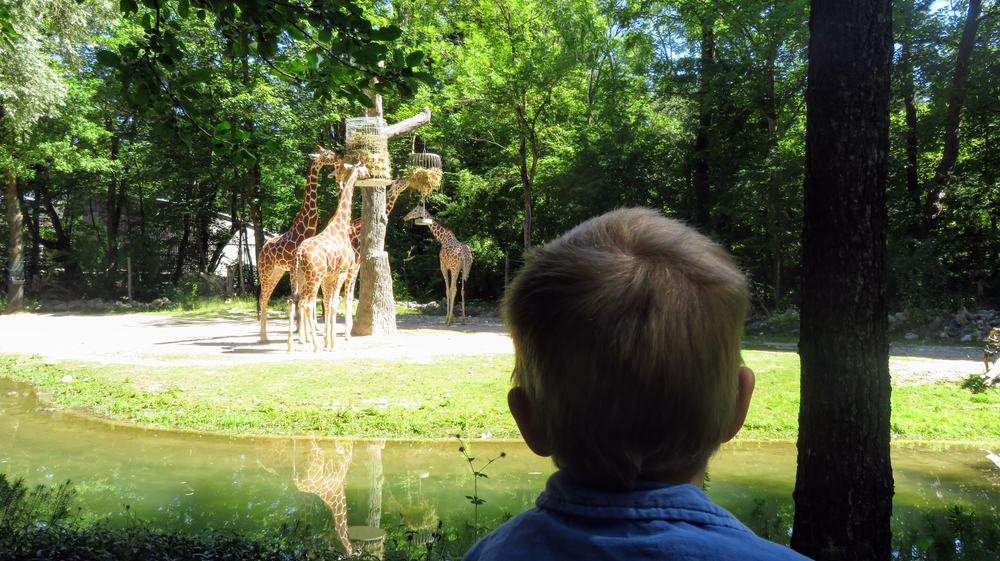
Munich’s zoo is my favorite in the world. Built along the Isar River, it has smaller streams running through it and plenty of trees to provide shade. It has an excellent collection of animals including elephants, giraffes, orangutans, gorillas, and chimpanzees. There’s also a petting zoo that offers horse rides as well as a playground.
More Ideas
Though these attractions are visited more by locals than tourists, you could also visit Munich’s Circus Krone (if the circus isn’t touring), the Sea Life aquarium, or the Fairy Tale Forest Amusement Park. My family has loved our trips to Poing Wildlife Park, which is located east of the city, but still accessible by public transportation. The animals roam free in large, natural habitats, and you can feed many of them by hand. There’s also an amazing adventure playground.
STOP AND PLAY
Englischer Garten (English Garden)
The Englischer Garten serves as Munich’s backyard (“English” refers to the natural landscape style). First created in in the 18th century, the garden contains more than 900 acres of grassy fields, paths, ponds, playgrounds and–because this is Munich–beer gardens (there are four!). Besides simply relaxing, be sure to visit the beer garden at the Chinese tower and to watch the surfers attempt to ride the standing wave in the man-made Eisbach (“Ice Brook”). Once an illegal activity, surfing is now a well-known tourist attraction in Munich!

Isar River
The Isar River flows along the eastern edge of the Englischer Garten as it bisects the city. You can bike or simply walk along the river trail. As you do–if weather permits–you’ll likely discover spots where locals are enjoying the cool water.
ALSO CONSIDER
Nymphenburg Palace
The Wittelsbach’s elegant summer palace isn’t too far from the city center (you can reach it via a tram ride and a short walk). Its extensive grounds make it a great destination for families. We like to stop in on quiet Sunday afternoons. Visitors can:
-
- Tour the palace. Among the 16 rooms open to the public are the gorgeous Great Hall and the Gallery of Beauties, which contains portraits of beautiful women commissioned by King Ludwig I.
-
- Explore the grounds. The 490-acre wooded grounds, which feature fountains, lakes, and canals, are open for free to walkers, joggers, and picnickers (but no bikers).
-
- Visit the outbuildings. Besides the palace itself, visitors can tour the Royal Stables Museum (Marstallmuseum), which has fancy coaches and fine porcelain (the palace has its own porcelain works). There’s also Amalienburg, a blinged-out hunting lodge, as well as a pagoda, a temple of Apollo, and fake ruins.
 Nymphenburg Palace’s elegant front entrance
BMW World Headquarters
Bavarian Motor Works’ world headquarters offers auto aficionados a number of ways to admire its famous cars and learn more about the company. There’s a large showroom (called BMW Welt) filled with new cars and motorcycles as well as a museum that traces the history of BMW since 1916. With advance reservations, you can also tour the BMW factory.
If you’re visiting the BMW complex, you might also like to explore the nearby Olympiapark (Olympic Park), home to many of the city’s 1972 Olympics venues. It’s now a local recreation, sports, and entertainment complex. There are playgrounds as well as the 620 ft. Olympic Tower (Olympiaturm), which offers great views and a revolving restaurant.
Dachau Concentration Camp Memorial Site
The Nazi Party’s first concentration camp is now both a memorial and a museum. Through exhibits and a walking tour of the camp’s buildings (including the crematorium), visitors discover the grim details of what happened here. Clearly, it’s a difficult place to visit, and parents will need to thoughtfully consider whether it’s appropriate to take their children.
The Dachau Concentration Camp is located in Dachau, an unassuming village 10 miles northwest of the city center. While many tour companies offer guided trips there, you also arrive by commuter train (S-Bahn).
Oktoberfest
Like Mardi Gras in New Orleans, some people plan their trips to Munich so they can attend Oktoberfest while others purposely avoid it. And while it’s true that Oktoberfest is a giant drinking party, there’s also a large fairground with many attractions for kids. If you do plan to take kids to Oktoberfest, I don’t recommend going to the party at night.
Allianz Arena
Allianz Arena is home to the world-class Bayern Munich soccer club. Even if you can’t make it to a game, you can take a guided tour of the arena and visit FC Bayern Erlebniswelt (Experience World), an exhibit about the history of the soccer club. The arena is a little north of the city center, but it’s easily accessible by subway.
Guided Tours
Both Radius Tours and Munich Walk Tours are among the many companies that offer walking tours and bike tours as well as day trips to places like Dachau and Neuschwanstein Castle. Mike’s Bike Tours provides bike tours of the city as well as private coach tours to Neuschwanstein. I also recommend simply downloading a free audio tour from Rick Steves.
EAT WELL
If “beer garden” doesn’t sound like a family-friendly dining option, you’ll be pleasantly surprised in Munich, where beer gardens are convivial places that welcome people of all ages. Many have playgrounds! Though our family doesn’t drink beer, we still enjoy the food (it’s mostly sausages and pretzels with a few other options) as well as the Apfelschörle (carbonated apple juice).

Besides the Viktualienmarkt and the Chinese Tower beer garden that I’ve mentioned above, a few of the city’s best beer gardens include:
-
- Augustiner-Keller — This popular beer garden (which seats around 5,000) includes both a playground and a more expensive restaurant.
-
- Hirschgarten — For an authentic (aka relatively tourist-free) beer garden experience, head over to Hirschgarten, a park north of the main train station. There are playgrounds (including a water playground) and an enclosure where you can feed deer by hand. With seats for around 8,000 people, it may be the biggest beer garden in the world.
Munich’s many bakeries sell delicious and inexpensive bread, pretzels, and pastries. If you’re a meat-eater, you’ll enjoy visiting a Döner Kebab restaurant, where you can buy shaved meat served in a soft pita.
Finally, be sure to enjoy some delicious chocolate and other kinds of candy while you’re in Munich. I’ve mentioned that Kaufhof has my favorite selection, but you’ll find lots of choices in any grocery store. For gourmet sweets, visit Dallmayr, which is also famous for its coffee and luxury foods.
DAY TRIPS
One of the best things about Munich and Bavaria is the Bayern Ticket, which allows unlimited use of all regional trains in Bavaria for a single day. Tickets start at 29 euros for the first person and 10 euros for each additional person (up to 5 people, kids under age 6 travel for free, and up to three of your own kids ages 6-14 can travel for free). Using this relatively inexpensive ticket, you can travel to and from historic cities such as Nuremburg and Regensburg as well as Füssen, the closest town to Neuschwanstein Castle. The ticket also includes travel to Salzburg, the birthplace of Mozart and the beloved (by Americans, at least) setting for The Sound of Music.
 The iconic Neuschwanstein Castle
KEEP IN MIND
-
- Munich was heavily damaged by Allied bombing during World War II. After the war, much of the city center was carefully reconstructed using old photographs and architectural plans.
-
- Munich has an excellent public transportation system, and since much of the inner city is inaccessible by car, it doesn’t make much sense to use one here. Within the city, you can walk or use buses and trams. If you want to travel farther afield, you can take S-Bahns (commuter trains) or regular trains. Munich offers excellent transportation discounts for families and groups. For instance, children under 6 travel for free, and, if you purchase a Group Day Ticket, up to five adults can travel on it (two kids equal one adult).
-
- Many museums are closed on Mondays, including the Alte Pinakothek, the BMW Museum, and the Nazi Documentation Center. It’s always a good idea to check a museum’s hours before visiting.
-
- If you’re visiting multiple sites, consider purchasing a combo pass such as the Munich City Tour Card or the Bavarian Palace Pass.
-
- Do you have questions about visiting Munich? Send a comment!
Thanks for reading about Munich and all the best things to do in Munich with kids. Please leave a comment or contact me if you have any questions or feedback!


